info@patafest.eu


What happens when citizens join a European research project without a lab of their own? We talk to Leo Mensel, project officer at ECSA, about how PataFEST is putting citizen science into practice, engaging everyday growers in potato testing and fertiliser trials, and what it takes to truly bring people into the research process.
What if anyone, without a lab, could take part in a European research project? That's essentially the premise of citizen science, and it's also the thread running through the collaboration between PataFEST and the European Citizen Science Association (ECSA).
We spoke with Leo Mensel, project officer at ECSA, about what citizen science is, how citizens have been engaged within PataFEST, and what results, expected and unexpected, this experience has brought so far.
What is citizen science?
For Mensel, the underlying idea is simple: bring research closer to people. "Everybody can do science, everybody can become a researcher," adding that the goal is to "lower the threshold as much as possible" so that citizens become "excited and consequently more trusting in science and research endeavors."
More formally, Mensel describes citizen science as an approach that "focuses on including citizens in research processes", a spectrum that can run from people helping design the research question itself to collecting data to being involved in shaping policy recommendations once the results are in.
That involvement, Mensel argues, is precisely what makes the approach valuable. Beyond the sheer amount of data that many hands can collect, people who take part in a project "are empowered by being part of the research process from the very beginning," which in turn makes the research itself more relevant: the topics being studied become directly "applicable to the people" doing the studying.
ECSA is working on a parallel effort to build a European community dedicated to this field: a space where organizations, projects, and individuals passionate about citizen science can come together, exchange knowledge, learn from one another, and recruit new participants, which is also reflected in the citizenscience.eu platform. “This platform, as well as the ECSA network have been immensely helpful in shaping citizen engagement activities and the webinar series for PataFEST”.
As Mensel points out, PataFEST is not a citizen science project in the strict sense, but that hasn't been an obstacle: "Sometimes it's already a step in the right direction to bring the citizen science aspect to projects and to new organizations."
From the lab to the urban garden
Asked about the concrete activities behind this collaboration, Mensel walks us through them almost the way they happened, starting with an admission: PataFEST's work so far has centered specifically on citizen engagement, inviting people in and helping them understand the research, rather than on citizens generating the results themselves.
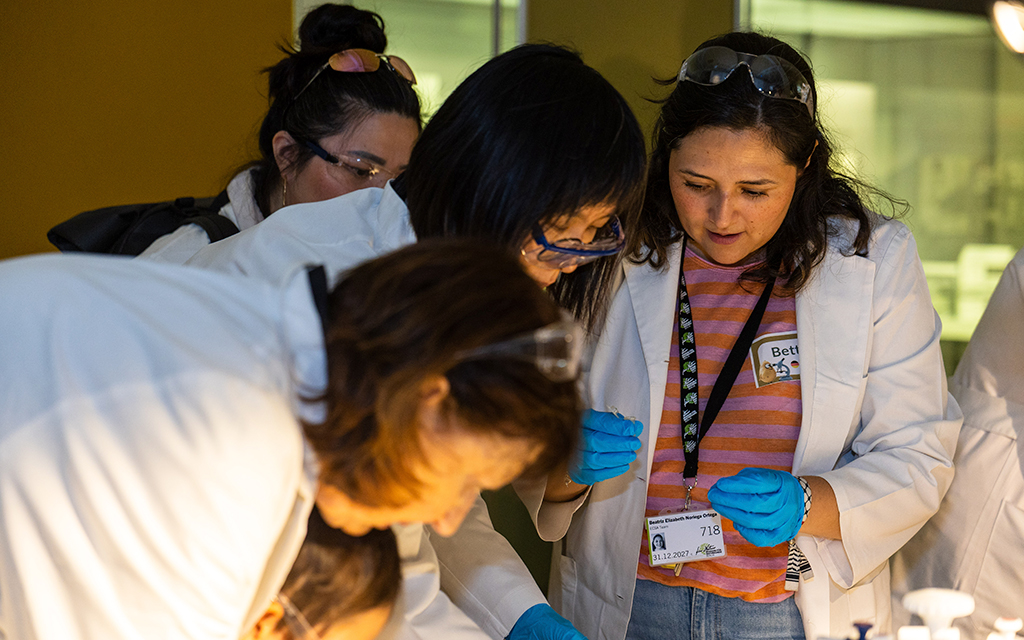
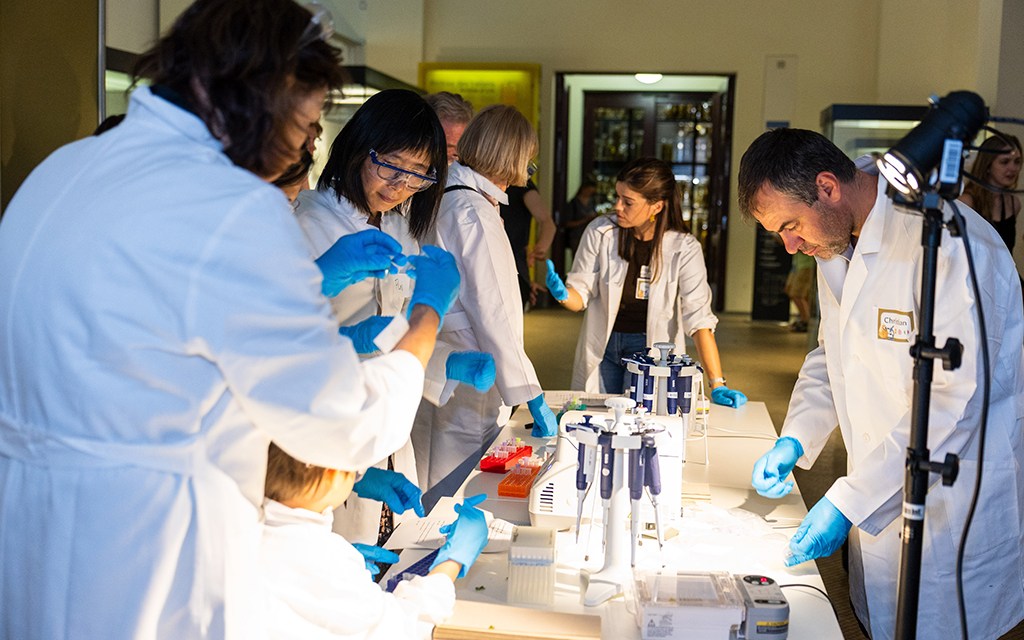
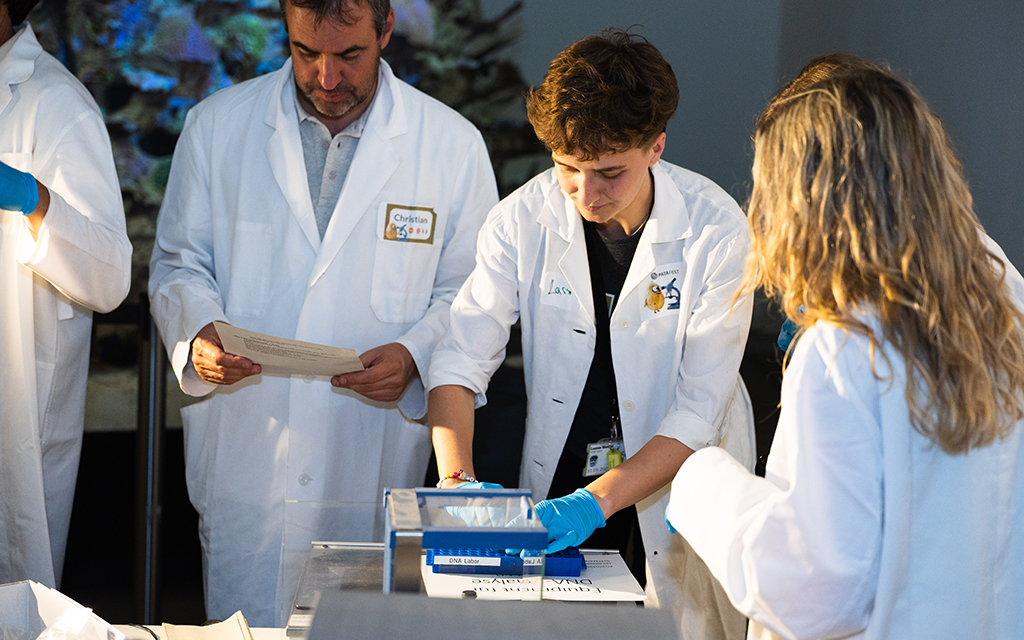
The clearest example, Mensel says, took place during the Long Night of Science at the Natural History Museum Berlin. Together with the museum's microbiology lab, the team invited urban gardeners and growers from Berlin to bring in their own potato plants for a DNA extraction and PCR sequencing. PataFEST partners including Funidtech, NEIKER, KNEIA, and ANECOOP supervised the process. As Mensel puts it, citizens were able to "test their own potatoes, thereby replicating what people at NEIKER have been doing during the project", a way, Mensel adds, of letting people "understand the research project process within PataFEST" from the inside.
From there, the conversation moves to the gardens themselves. In May 2025, ECSA ran a workshop at Stadtgarten Lichtenberg, an urban garden in Berlin, where the biofertiliser developed by CHEMIA as part of PataFEST was distributed and put to the test. Participants tracked plant growth, soil health, and eventually potato yield, but, as Mensel recalls with some amusement, the trial didn't stay confined to potatoes: "we had different urban gardens, either private or public, test the fertilizer," and several people went off-script, trying it on herbs, tomatoes, and even a banana tree.
Then there are the webinars, which Mensel describes less as a showcase and more as a meeting point. "Not every scientist is aware of citizen science," Mensel notes, so the webinar series set out to "bring together different stakeholders working in citizen science to differing degrees." The most recent session brought in three very different voices: a researcher describing her first project working with farmers, a citizen science expert with decades of experience in the field, and an Ecuadorian farmer who talked about how he engages with scientific institutions back home.
And almost as an aside, Mensel mentions something only just found out: PataFEST partners are also turning to existing citizen science infrastructure to strengthen the research, using platforms like iNaturalist, built on flora and fauna data submitted by citizens, "to identify important hotspots" relevant to the project.
Results that weren't in the script
Asked about concrete results, Mensel points to something the team hadn't quite anticipated: people using the biofertiliser on plants other than potatoes. "For an otherwise very potato-focused project [it] was interesting to see," Mensel says, because “from the citizen activities, it was hard to tell whether the fertiliser had an impact on tuber growth, as there were differing outcomes. However, one thing all tests had in common was the growth of leaves, both in potato plants as well as in herbs and trees.” Some participants had even applied the fertiliser to plants they had already declared dead, "and then the fertilizer actually helped them come back to life."
Beyond the field data, two moments stand out as especially rewarding for Mensel. One was the Long Night of Science itself: "the researchers were motivated, the citizens joining were really excited," to the point that some attendees reached out to the team afterwards. The other was a panel session at the PartWiss conference in Leipzig, made up almost entirely of women, both on the panel and in the audience, which raised issues rarely discussed elsewhere, such as the fact that "farming equipment [is] not being designed for women."
Lessons along the way
Asked what Mensel would do differently, the answer is self-critical: the team should have reached out to urban gardens earlier, to first understand their interests, rather than presenting them directly with a specific task like testing the fertiliser. "Citizen science is supposed to be more of a bottom-up approach," Mensel notes, and applying principle "would have allowed us to reach many more people, and also receive very different type of feedback."
Mensel's main advice for future agriculture and citizen science projects is as practical as it is telling: have contact with at least ten farmers before the project starts, keep up regular engagement, even if it's just visiting the gardens, and, above all, don't assume who "a farmer" is. As Mensel warns, behind that word lies a highly diverse group, ranging from small-scale urban growers to people who studied farming at university and work at a much larger scale: "farmers is not one stakeholder group."
Asked whether these activities could go on to influence policy decisions, Mensel is candid: it's still early days for PataFEST specifically, but there's hope that the broader wave of agricultural citizen science projects, especially those focused on soil health, will help show decision-makers that "funding is definitely needed for those projects." In Mensel's own words, "we're at the very beginning, and much more could be done in this area."
Anyone interested in exploring this intersection of agriculture and citizen science further can join the ECSA Agri-Food Working Group, an open community that meets regularly.
You can watch the full PataFEST webinar series on YouTube: "Engaging citizens in protecting plant health" and "Engaging farmers in citizen science projects".