 info@patafest.eu


A new paper in Agronomy evaluates the response of 336 potato genotypes to Fusarium sambucinum and validates a scale for classifying their susceptibility to dry rot.
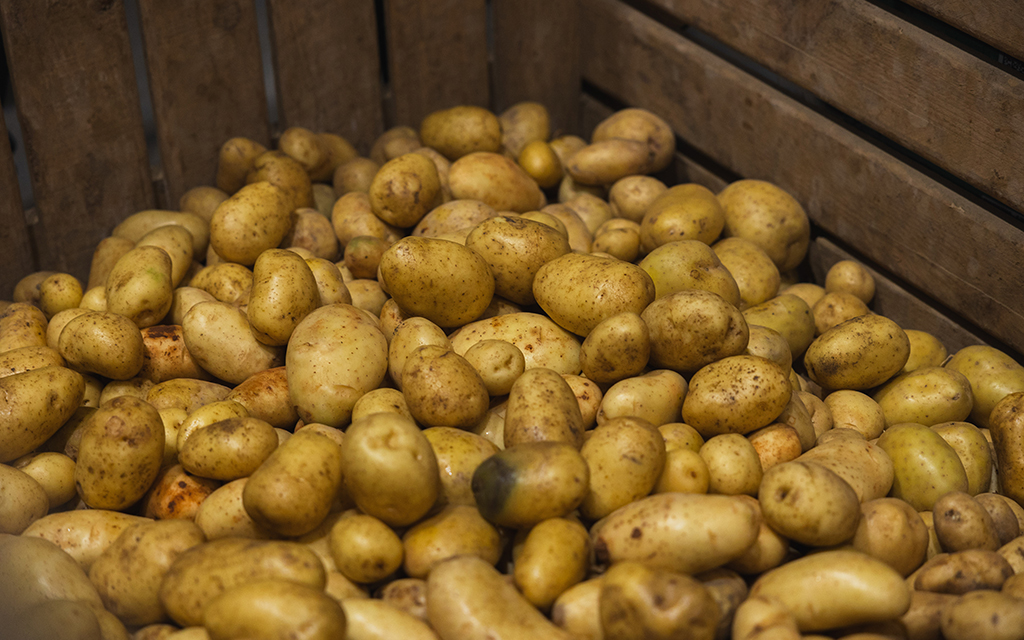
PataFEST researchers from NEIKER have published the paper “Phenotypic Screening and Statistical Validation of an Evaluation Scale for Fusarium Dry Rot Resistance in Potato Germplasm” in Agronomy (2026), an open access journal by MDPI. The study screens a large collection of potato varieties and breeding clones for their response to Fusarium dry rot, one of the main diseases affecting potatoes during postharvest storage.
Dry rot is caused by fungi of the genus Fusarium, which enter tubers through wounds made during harvesting and handling. Infected potatoes become unsuitable for fresh consumption or industrial processing, and some Fusarium species also produce mycotoxins, adding a food safety concern. Because few resistant varieties are available, control relies on a combination of cultural, chemical and biological measures.
The study looks at this problem from the side of the potato itself. The researchers evaluated how 336 potato genotypes, including 295 commercial varieties and 41 breeding clones, respond to Fusarium sambucinum, the species considered most aggressive in Europe. Their starting point is that large-scale, standardised phenotypic data on dry rot resistance, meaning direct observations of how each variety reacts to the disease, remain limited for commercially relevant cultivars. The aim was to identify genotypes with better resistance and to build a robust dataset that breeding programmes can use to develop new varieties more resistant to the pathogen.
The paper begins by outlining the impact of dry rot and the current options for managing it, before describing how the study was carried out. The team isolated the fungus from infected tubers, confirmed its identity with molecular analysis, and inoculated tubers of each genotype under controlled postharvest conditions over two seasons. They then measured how far the rot penetrated into the tubers and used an established scale to classify each genotype by its level of susceptibility. The results section reports how the genotypes were distributed across these categories and the statistical tests used to check that the scale distinguishes them reliably.
In the discussion, the authors relate their findings to what is known about how potatoes defend themselves against Fusarium, such as the integrity of the tuber skin and its ability to heal wounds. They also point out the study’s limitations: the experiments were carried out under controlled inoculation conditions, which may not fully reflect field or storage environments, and a single fungal isolate was used. They recommend future work with multiple isolates and a wider range of conditions. The raw experimental data are provided as supplementary material.
The authors conclude that the study provides one of the most comprehensive phenotypic evaluations of dry rot resistance in potato germplasm to date. Although no variety was fully resistant, both moderately susceptible and highly susceptible cultivars were identified, offering valuable insights for breeding programmes. They add that this phenotypic screening can be integrated with genomic tools to accelerate breeding for improved resistance and postharvest performance.
Within PataFEST, this expertise contributes to the project’s work on soil-borne pathogens that affect potatoes during postharvest storage, such as Fusarium sambucinum, and supports one of its main goals: identifying the most suitable potato varieties for their resistance to pests and soil-borne pathogens.
The full article is available here: Phenotypic Screening and Statistical Validation of an Evaluation Scale for Fusarium Dry Rot Resistance in Potato Germplasm
References
Iribar, C., Barandalla, L., Ortiz-Barredo, A., Leyva-Pérez, M. de la O., & Ruiz de Galarreta, J. I. (2026). Phenotypic Screening and Statistical Validation of an Evaluation Scale for Fusarium Dry Rot Resistance in Potato Germplasm. Agronomy, 16(13), 1295. https://doi.org/10.3390/agronomy16131295