 info@patafest.eu


From marine waste to agricultural resource, the PataFEST project reimagines how we produce fertilizers. By transforming discarded seashells from the food industry into biofertilizers, European researchers aim to improve soil health and improve crop resilience. A circular approach that turns an abundant waste stream into an innovative solution for more sustainable agriculture.
From Shell Waste to Soil Health: Reinventing Biofertilizers in PataFEST
From marine waste to agricultural resource, the PataFEST project reimagines how we produce fertilizers. By transforming discarded seashells from the food industry into biofertilizers, European researchers aim to improve soil health and improve crop resilience. A circular approach that turns an abundant waste stream into an innovative solution for more sustainable agriculture.
From Shell Waste to Soil Health: Reinventing Biofertilizers in PataFEST
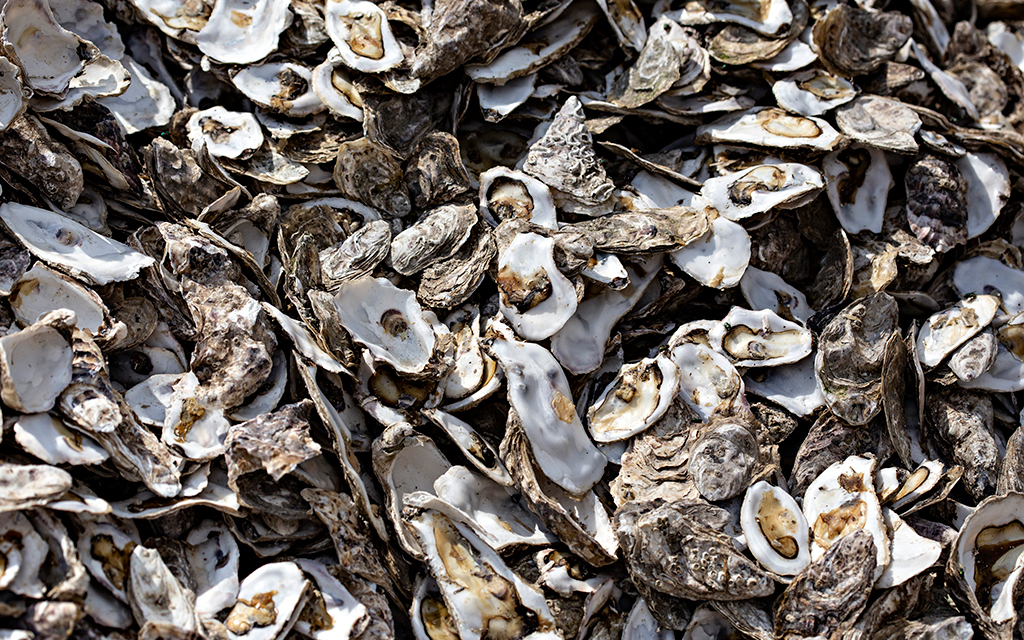
Seashells usually end their journey far from the sea. After oysters and clams are served, their shells accumulate as food industry waste, mineral remnants of marine life, rich in calcium but rarely reconsidered.
In the European project PataFEST, researchers are giving these discarded biomaterials a new role in agriculture. At the University of Bologna, researchers are working to transform shell waste into biofertilizers designed to increase plant resilience and improve nutrient management.
As Claudio Ratti, researcher at the Department of Agricultural and Food Sciences and Technologies, explains, the goal is to develop biofertilizers starting from waste materials from the food industry. Instead of extracting new mineral resources, the project rethinks what is already available.
A biomineral with unique properties
For the chemistry team, shells are not simply calcium carbonate. They are biominerals, materials formed by living organisms and structured differently from geological stone. “The waste material we chose is shells… a biomineral to be further valorized, not to be disposed of, to be valued with another use,” says Simona Fermani from the Department of Chemistry.
Unlike mineral limestone, biologically derived calcium carbonate contains a small percentage of an organic matrix made of proteins and polysaccharides. This matrix gives shells structural and mechanical properties that differ from geological calcium carbonate. Shells are composed of different polymorphs of calcium carbonate such as magnesium calcite (oysters) or aragonite (clams). Both are not found in quarried calcium carbonate and one of the goals, according to Simona, is to verify if they have a greater capacity to absorb ions useful as plant micronutrients.
From durable shells to functional powders
The transformation process begins mechanically. Shells are extremely durable materials, so they must be broken down using specialized industrial grinders to obtain fine powders.
Once ground, the powders are functionalized through chemical reactions carried out without harmful solvents, ensuring safety for plants and the environment. The aim is to incorporate selected micronutrients into the calcium carbonate structure.
The agricultural team identified zinc, iron, phosphorus, boron and molybdenum as key elements. Based on available literature, these micronutrients are considered likely to help maintain plants in a healthier state compared to traditional nutrition strategies.
Designing nutrients over time
A central challenge is not simply adding nutrients but controlling how they are released.
As Ratti points out, plants cannot absorb these elements all at once; they must be available over time. The longer nutrients remain accessible in the soil, the fewer applications are required and the more stable the plant’s nutritional condition.
For this reason, the formulation has been designed to optimize the amount of incorporated elements while reducing and extending their release over a longer period. In laboratory tests, the researchers analyze the chemical structure of the powders and monitor how nutrients are released in water over hours and days before moving to soil experiments.
Supporting natural plant defenses
Beyond nutrition, the project explores whether improved micronutrient availability can enhance resistance to pathogens in potatoes, the model crop of PataFEST.
Ratti explains that the basic idea is to keep the plant in a better state of health so that it can respond with its own defenses to pathogen attacks. Another complementary approach involves introducing elements that make the environment less favorable for pathogen development.
Among the pathogens studied is Candidatus Liberibacter solanacearum, Zebra chip, a quarantine bacterium that causes serious production losses, including in countries such as Ecuador.
Rethinking agricultural inputs
At its core, PataFEST proposes a shift in perspective. Shell waste is not treated as a residue to discard, but as calcium carbonate with added properties, a material whose biological origin offers functional advantages. “What we proposed is using a calcium carbonate with added properties, which is a waste material. It’s not only found in agriculture but used in many other fields, for example in the pharmaceutical sector, in cosmetics, so it’s a multifunctional material that fits many product manufacturing areas.”, Simona explains.
By combining this biomineral structure with carefully selected micronutrients and controlled-release design, the project explores a circular approach to fertilization, one in which marine waste becomes a strategic agricultural resource.
From shell to soil, the material does not simply return to the earth. It re-enters the system with new purpose.